Why a House Smells Like Septic
Quick answer: A sewage or “septic” smell in the house is often indoor plumbing—a dry floor-drain trap, a loose wax ring, or a vent problem—rather than a failing tank. When the septic system is the cause, common reasons are a loose or missing lid, a clogged effluent filter, a damaged baffle, or a tank that is overdue to be pumped. If you also have slow drains, sewage in a fixture, or wet ground over the field, treat it as urgent and call a licensed pumper.
We may earn a commission if you buy through links on this page, at no extra cost to you. Full disclosure and sources are at the bottom of the page.
Is the smell from the septic system or from indoor plumbing?
Start inside, because many “septic” odors never leave the house piping:
- A floor drain or unused shower whose trap has dried out can let sewer gas in. Run water in that fixture and see if the smell fades.
- A loose toilet or a failed wax ring can leak odor at the floor, usually right around the bowl.
- A plumbing vent that is blocked can push odors back indoors when fixtures drain.
If the smell is strongest outdoors, at a tank lid, or over the drainfield, or if it appeared after heavy rain or a long gap since the last pump-out, look at the tank next.
EPA lists odors around the tank or drainfield, along with slow drains and standing water, as warning signs that the system needs attention. A smell after a recent pump-out can also mean a lid was not reseated.
What septic problems can cause a sewer smell?
- A loose, cracked, or missing lid. Gas and odor escape at grade. A fastening replacement lid, matched to brand and diameter, is the usual fix when the riser itself is sound. See how to replace a septic tank lid.
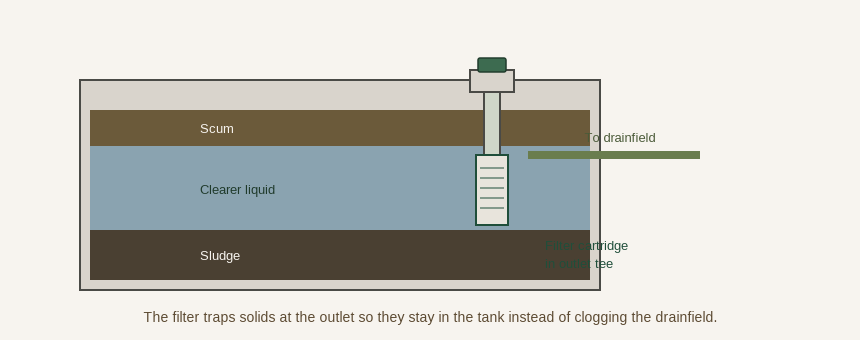
- A clogged outlet filter. Water and gas can back up toward the house. Hose the cartridge off over the tank, or replace it if it is damaged, on the effluent filter page.
- A failed inlet or outlet baffle. Scum can escape or turbulence can increase odor at the lids. That is a reason to have the tank opened at the next pump-out; see septic tank baffles.
- A tank that needs pumping, or a struggling drainfield. Combine odor with gurgling drains or soggy ground and you are past a “maybe.” Follow signs your septic tank needs pumping.
- A pump-chamber issue. If you have a septic alarm, treat a smell plus an alarm as a same-day call.
Do not pour a septic additive or a heavy dose of chemical to “kill the smell.” EPA does not recommend additives for household systems, and solvents can make a problem worse.
What should you check first?
- Run water in unused drains and look at the base of toilets.
- Walk the yard and sniff at the lids, not only at the front door. If you have not found the lids, use how to find your septic tank lid.
- Confirm the lids are present and fastened. Do not leave an opening uncovered.
- If you can safely open the outlet lid from above, look at the filter. Never enter the tank.
- Find the last pump-out date. If it is missing or older than EPA’s typical 3-to-5-year range, schedule a pump and inspection.
A smell only when it rains can be a lid or vent issue, or a field that is saturated. A smell that started right after pumping often is a lid or cap that was not put back.
When should you call a pro?
Call a licensed pumper or plumber the same day if sewage is backing up, pooling in the yard, or the odor comes with an alarm that will not clear. Call promptly if the smell persists after you have refilled traps and checked lids. Never enter a septic tank. This page is not medical, legal, or code advice. If anyone in the house has symptoms they tie to sewer gas, leave the area and get advice from a qualified professional; do not “air out the tank” by removing lids and walking away.
Frequently asked questions
Why do I smell septic in the house when it rains?
Rain can saturate the drainfield or leak into a poorly sealed lid and push odor. It can also be a plumbing vent issue that only shows up when the soil is wet. If drains slow down or the yard ponds, call a pumper.
Can a septic tank cause odor in the house even if toilets flush?
Yes. A dry trap, a loose lid, or a clogged filter can smell before a fixture actually backs up.
Should you use a chemical or additive to stop the smell?
No. EPA does not recommend septic tank additives as a fix, and dumping chemicals can harm the tank. Find the source and pump or repair as needed.
Is a septic smell dangerous?
Sewer gas is a reason to ventilate, find the source, and not enter the tank. Persistent odor plus backup or illness is a same-day professional visit, not a DIY inspection inside the tank.
Related guides
Signs your septic tank needs pumping · Septic tank lids and covers · Effluent filter cleaning and replacement · Septic tank baffle · What to do when a septic alarm goes off
Sources and notes
Affiliate disclosure: Some links on this page will be affiliate links. If you buy through them, we may earn a commission at no extra cost to you. We have not tested products.
Last checked: November 27, 2026 (America/Chicago).
- U.S. EPA, How to Care for Your Septic System: odors, wet spots, and backups are warning signs; never enter a tank; keep lids secure.
- U.S. EPA, Frequent Questions on Septic Systems.
- U.S. EPA, Do your Part—Be SepticSmart!.