What to Do When a Septic Alarm Goes Off
Quick answer: When a septic alarm goes off, stop adding water to the system, silence the buzzer if you can, and leave the warning light on. Check whether the pump’s breaker has tripped, and look for slow drains, sewage odor, or standing water near the tank or drainfield. A single alarm during a heavy rain can happen when the field is saturated; an alarm that stays on after the ground dries, or that comes with a backup in the house, is a reason to call a septic pro the same day.
We may earn a commission if you buy through links on this page, at no extra cost to you. Full disclosure and sources are at the bottom of the page.
What does a septic alarm actually mean?
A high-water alarm reports a level, not a diagnosis. On systems with a pump chamber, a float sits higher than the pump’s normal on/off float. When wastewater rises to that extra reserve, the float closes and the alarm sounds. EPA says systems with electrical floats or pumps should generally be inspected once a year, because a failed pump, a stuck float, or a clogged effluent filter can all raise the water.
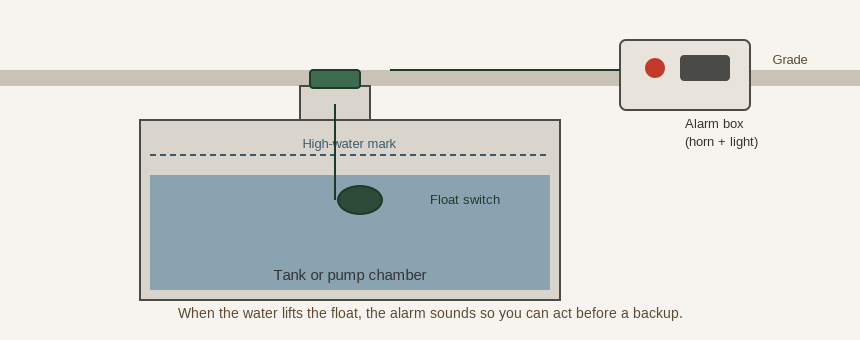
Many gravity tanks have no pump and no alarm. If you do have a panel or a yard alarm, treat it as a warning that the system is using its reserve, not as a suggestion to keep running laundry until it stops.
If the alarm hardware itself is broken, or you have a pump tank with no working alarm, see Septic alarms: how they work and which to buy. This page is about what to do while it is sounding.
What should you do in the first hour?
- Cut indoor water use. Pause laundry, the dishwasher, long showers, and extra flushing. The reserve in a pump tank is there to buy you time, not to handle a normal day’s water.
- Silence the horn if the panel has a mute or test/silence button. Leave the light on so you can tell whether the level later drops.
- Check the breaker or fuse once. A dedicated septic or pump circuit sometimes trips during a storm or outage. Reset it once. If it trips again, stop and call for service. Do not keep flipping the breaker.
- Look and listen from above grade. From the yard, check for sewage odor, unusually soft ground, or ponding over the tank or drainfield. Inside, treat gurgling toilets, slow tubs, or wastewater coming back up as urgent.
- Do not open the tank and reach in. Never enter a septic tank or pump chamber. The gases can be fatal. Anything that needs hands below the lid is a job for a licensed professional.
If drains start to fail while you are waiting, stop all water use and call a pumper or your service provider the same day.
Why does a septic alarm go off after heavy rain?
Heavy rain can raise the water table and keep a drainfield from accepting effluent as quickly as usual. Rain can also leak into a pump chamber through a poorly sealed lid, a missing cap, or a low inspection port. Either way, the alarm float can trip even if the pump still runs.
A one-time alarm in an exceptional storm, with no backup in the house, often clears after you cut water use and the ground dries. An alarm that repeats every time it rains is a warning, not “normal weather.” It can mean infiltration, a struggling field, or a float or pump problem that only shows up when the system is stressed.
For the difference between a full tank and a failing field, see signs your septic tank needs pumping.
Why might it go off after a power outage or after pumping?
After a power outage, a pump cannot empty the chamber. Water you use during the outage fills the reserve, and the alarm may sound when power returns or just before it does. Cut water use during the outage, then give the pump a chance to catch up once power is back. If the alarm stays on, check the breaker once and call for service if the level does not drop.
After pumping, an alarm can mean a float was left tangled, a pump was unplugged or not reseated, or a tight lid was not put back on correctly. Call the pumper back if the alarm starts right after a visit and does not clear.
An alarm that sounds when the tank is not actually high can be a stuck or failed float, a wiring fault, or a panel problem. That still needs a pro; guessing which float is wrong from the yard is not a safe DIY diagnosis.
When should you call a pro?
Call a licensed septic pumper or service provider the same day if any of these are true:
- Wastewater is backing up in the house, or sewage is pooling in the yard.
- The alarm stays on after the rain stops and you have cut water use.
- The breaker trips a second time, or you can hear the pump running but the level does not fall.
- You recently had the tank pumped and the alarm started immediately afterward.
- You are not comfortable opening a control panel or working around an open lid.
Never enter a septic tank. This page is not legal, code, or electrical advice. A licensed electrician should handle 120-volt wiring. If you also have a pump that will not run, see septic effluent pumps for how a replacement pump is specified—do not buy one while the alarm is still a mystery.
Frequently asked questions
What should you do when a septic alarm goes off in the rain?
Cut water use, silence the buzzer if you can, and check the breaker once. If the house is not backing up, wait for the ground to start drying. If the alarm stays on or drains slow down, call a pro.
Can you reset a septic alarm and keep using water?
Silencing the horn does not fix the high water. Keep water use very low until the light goes out. Repeated resets without a repair can fill the reserve and send sewage back toward the house.
Does a gravity septic system have an alarm?
Not always. Many gravity tanks have no pump and no alarm. If you have no panel and no yard alarm, watch for slow drains, odors, and wet spots instead, and follow the pumping schedule.
Is a one-time alarm after a storm an emergency?
Not by itself, if fixtures still drain and nothing is surfacing in the yard. Treat a repeat rain alarm, a backup, or an alarm that will not clear as urgent.
Related guides
Septic alarms: how they work and which to buy · Septic effluent pump · Signs your septic tank needs pumping · Effluent filter cleaning and replacement · How often to pump your septic tank
Sources and notes
Affiliate disclosure: Some links on this page will be affiliate links. If you buy through them, we may earn a commission at no extra cost to you. We have not tested alarm panels or floats.
Last checked: November 27, 2026 (America/Chicago).
- U.S. EPA, How to Care for Your Septic System: systems with electrical floats or mechanical components should generally be inspected once a year.
- U.S. EPA, Frequent Questions on Septic Systems: watch for odors, standing water, and slow drains; do not wait on a failing system.
- Washington State Department of Health, Mound Systems: Recommended Standards and Guidance (publication 337-013): a pump tank includes an on/off float and a high-water alarm; silencing the alarm does not correct the problem; never enter the pump chamber.