How to Replace a Septic Tank Lid
Quick answer: Replace a cracked, warped, or unfastened septic tank lid with a cover that matches the brand and diameter, not a generic “24-inch” guess. Measure the opening or the old lid, buy the matching cover, and install it so it fastens. If there is no riser and you are looking at a broken concrete plug, you may need a riser kit or a pro, not a plastic lid dropped onto the tank. Product picks live on septic tank lids and covers.
We may earn a commission if you buy through links on this page, at no extra cost to you. Full disclosure and sources are at the bottom of the page.
How do you know you need a new lid?
Replace the cover if it is cracked, crumbling, missing pieces, or will not fasten. A lid that rocks, has a broken handle, or sits below grade in standing water is also a problem. A secure lid is a safety device: it keeps people and pets out of the tank and keeps debris and rain out. EPA’s care guidance is to keep lids secure and never enter a tank.
If the lid is sound and already at grade, you do not need a new riser just to change the cover. If the lid is buried and you have to dig for every pump-out, that is a riser decision, not only a lid swap.
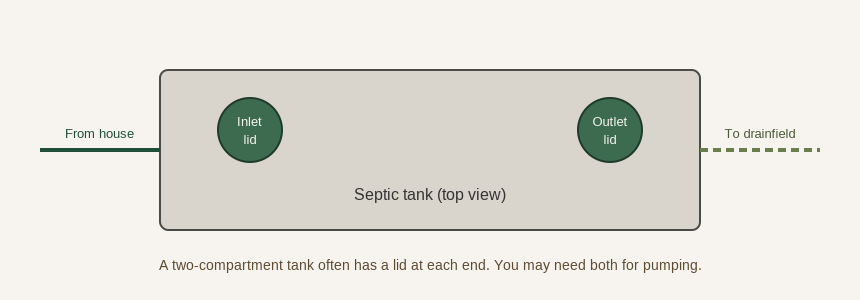
Many tanks have two lids, one at each end. Replace the damaged one and check the other. See how to find your septic tank lid if you only know about one.
How do you measure so the new lid fits?
Measure before you order. Do not go by memory or by a neighbor’s tank.
- Find the brand if it is molded or stamped on the existing lid or riser (Tuf-Tite, Polylok, Norwesco, and similar names show up often). Same-brand lids usually drop in; mixed brands often do not.
- Measure diameter across the lid or across the opening the lid sits on, in inches. Measure the part that has to match, not a decorative rim.
- Note the shape and style: domed vs flat, and whether the lid uses screws, a twist lock, or a heavy-duty cover.
- Measure the riser or opening, not only the old lid, if the lid is broken into pieces. Lids are sometimes a different size than the hole.
There is no single “standard” septic tank lid size. Twenty-inch and 24-inch plastic covers are common on risers, but concrete tanks and older lids vary. If you cannot get a clean measurement, take photos and numbers to a pumper or a dealer rather than ordering two sizes “just in case” and leaving a tank poorly covered in the meantime.
How do you replace it safely?
Have the new lid on site before you remove a cover that is still keeping the opening closed, unless the old lid is already unsafe.
- Keep children and pets away. Do not leave the opening unattended.
- Lift the old lid from above. If it is stuck or the handle has broken off, a pumper or installer may need to do this. Do not pry in a way that drops concrete or tools into the tank.
- Set the new lid so it seats fully and fastens. Tighten the screws or lock the cams the way the manufacturer specifies.
- Confirm the cover is not a trip hazard and does not pond water.
- Mark the location so you can find it for the next pump-out.
Never enter a septic tank. If the riser top is damaged, or you are looking at a broken concrete slab over the tank itself, stop. A plastic riser lid will not magically adapt to a raw concrete opening.
The full good / better / best table stays on the lids and covers page. As a starting point, a Tuf-Tite 24-inch domed lid (24-RISL) was about $42 as of Nov 2026 as of November 27, 2026 (America/Chicago), check current price—but only if you actually have a matching 24-inch Tuf-Tite riser.
Worked example
A homeowner finds a cracked 24-inch plastic lid on a green riser with “Tuf-Tite” molded in the cover. The opening measures 24 inches at the rim the lid sits on, and the stack is already at grade. That is a lid replacement, not a new riser: order the matching 24-inch Tuf-Tite cover, fasten it, and keep the second lid if that one is still sound. If the same yard had a buried concrete plug and no riser, the next step would be measuring for a kit, not buying a 24-inch plastic lid and hoping it sits on the concrete.
When should you call a pro?
- The lid is a concrete slab you cannot lift safely, or it has fallen into the tank.
- The riser or tank top is cracked, leaking, or under a driveway.
- You cannot identify the brand or get a reliable measurement.
- You need a riser installed, not only a cover. See how to install a septic tank riser.
This page is not legal, code, or engineering advice. Check local rules if a damaged lid has been reported as a hazard.
Frequently asked questions
What size is a standard septic tank lid?
There isn’t one standard size. Measure your opening or the old cover. Twenty-inch and 24-inch plastic lids are common on residential risers, but they are not universal.
How do you remove a septic tank lid with a broken handle?
Work from above and do not leave the tank open. If the lid is stuck or you would have to pry hard, have a pumper or installer remove it so nothing falls in and no one leans into the opening.
Can you put a plastic lid on a concrete tank?
Not directly, in most cases. A plastic riser lid is made for a matching riser. A concrete tank usually needs an adapter and riser, or a pro, not a cover set on the slab.
Do both lids have to be replaced at once?
Only if both are damaged or the wrong size. Many tanks have two openings; inspect both, and replace what is unsafe.
Related guides
Septic tank lids and covers · How to find your septic tank lid · How to install a septic tank riser · Do I need a septic riser? · Can you drive over a septic tank?
Sources and notes
Affiliate disclosure: Some links on this page will be affiliate links. If you buy through them, we may earn a commission at no extra cost to you. We have not installed these lids.
Prices were checked on November 27, 2026 (America/Chicago) on Amazon. Last checked: November 27, 2026.
- U.S. EPA, How to Care for Your Septic System: keep lids secure; never enter a tank.
- Tuf-Tite 24-inch domed lid (24-RISL), about $42 as of Nov 2026: Amazon B0186MMET8 (confirm the title and fit on the lids page). Full picks and current prices: septic tank lids and covers.